 2010 in New York City. The CXDI-70C has been announced for the first time at the recently held AHRA Annual Meeting. The system has an image area of 14” x 17”, facilitating its mobility for radiologists and technologists. The new equipment weighs only 7.5 pounds and integrates a Canon-developed glass substrate with a pixel pitch of 125 microns. The unit also features a cesium iodide scintillator. At AHRA, the company also displayed several other systems, such as the CXDI-50RF Dynamic/Static Digital Radiography System, the CXDI-55G and CXDI-55C Digital Radiography systems, the CXDI-60C Multipurpose Portable Digital Radiography System, and the CXDI-40G COMPACT Digital Radiography System.
Monday, 6 September 2010
Canon U.S.A. Announces Its First Wireless Digital Radiography System.
Canon U.S.A., Inc., has launched its new wireless digital radiography system, CXDI-70C, at the Canon Expo 2010 in New York City. The CXDI-70C has been announced for the first time at the recently held AHRA Annual Meeting. The system has an image area of 14” x 17”, facilitating its mobility for radiologists and technologists. The new equipment weighs only 7.5 pounds and integrates a Canon-developed glass substrate with a pixel pitch of 125 microns. The unit also features a cesium iodide scintillator. At AHRA, the company also displayed several other systems, such as the CXDI-50RF Dynamic/Static Digital Radiography System, the CXDI-55G and CXDI-55C Digital Radiography systems, the CXDI-60C Multipurpose Portable Digital Radiography System, and the CXDI-40G COMPACT Digital Radiography System.
2010 in New York City. The CXDI-70C has been announced for the first time at the recently held AHRA Annual Meeting. The system has an image area of 14” x 17”, facilitating its mobility for radiologists and technologists. The new equipment weighs only 7.5 pounds and integrates a Canon-developed glass substrate with a pixel pitch of 125 microns. The unit also features a cesium iodide scintillator. At AHRA, the company also displayed several other systems, such as the CXDI-50RF Dynamic/Static Digital Radiography System, the CXDI-55G and CXDI-55C Digital Radiography systems, the CXDI-60C Multipurpose Portable Digital Radiography System, and the CXDI-40G COMPACT Digital Radiography System.


Philips Presents The Third Generation Of SpeechMike For Improved Dictation.
Philips Speech Processing, a company based in Andover, Mass, has recently presented the third generation of its  SpeechMike audio recording system, which was developed to enhance the quality of dictation. The latest version of SpeechMike includes several features which will significantly provide more options for its useres.
SpeechMike audio recording system, which was developed to enhance the quality of dictation. The latest version of SpeechMike includes several features which will significantly provide more options for its useres.
Siemens Sells Calypso’s Tracking Technology Of Tumor Cells.
A new product distribution agreement has been signed between Calypso Medical Technologies, Inc., a developer  of real-time technology for precise tracking, and Siemens Healthcare. Following this agreement, the capability of detecting and tracking tumor cells during radiation therapy treatments is expected to be markedly improved. According to this three-year period agreement, Siemens will have non-exclusive rights to deploy and sell Calypso’s real-time tracking technology to the current and potential Siemens' progressively increasing customers throughout Europe.
of real-time technology for precise tracking, and Siemens Healthcare. Following this agreement, the capability of detecting and tracking tumor cells during radiation therapy treatments is expected to be markedly improved. According to this three-year period agreement, Siemens will have non-exclusive rights to deploy and sell Calypso’s real-time tracking technology to the current and potential Siemens' progressively increasing customers throughout Europe.
U.S. Hospitals Gain Little From Electronic Health Records Implementation.
Shifting the healthcare system from paper-based to electronic-based in the United States may improve healthcare  quality and reduce costs, but in a new study by Harvard School of Public Health (HSPH), entitled "A Progress Report on Electronic Health Records in U.S. Hospitals", researchers suggest that goal is far off. The implementation of basic or comprehensive electronic health records (EHR) by U.S. hospitals has been elevated modestly from 8.7% in 2008 to 11.9% in 2009, but only 2% of hospitals met the federal "meaningful use" standard required to earn government financial incentives.
quality and reduce costs, but in a new study by Harvard School of Public Health (HSPH), entitled "A Progress Report on Electronic Health Records in U.S. Hospitals", researchers suggest that goal is far off. The implementation of basic or comprehensive electronic health records (EHR) by U.S. hospitals has been elevated modestly from 8.7% in 2008 to 11.9% in 2009, but only 2% of hospitals met the federal "meaningful use" standard required to earn government financial incentives.
EHI Live 2010 Hosts UK PACS And Teleradiography Group Meeting.
E-Health Insider Live 2010 will host the UK PACS and Teleradiography Group meeting for this year, to provide  delegates with an insight into next generation PACS (picture archiving and communications systems). The group is a special interest group of the Royal College of Radiologists and includes radiologists, radiographers, healthcare IT professionals and PACS managers. It carries out a very active public forum with more than 3,000 participated users, in which a wide variety of clinical IT and technical issues are discussed and best practice is shared.
delegates with an insight into next generation PACS (picture archiving and communications systems). The group is a special interest group of the Royal College of Radiologists and includes radiologists, radiographers, healthcare IT professionals and PACS managers. It carries out a very active public forum with more than 3,000 participated users, in which a wide variety of clinical IT and technical issues are discussed and best practice is shared.
Disclosing Medical Errors Leads To Decrease In Costs And Number Of Lawsuits.
A study published in the Annals of Internal Medicine by The University of Michigan, Ann Arbor, entitled "Liability  Claims and Costs Before and After Implementation of a Medical Error Disclosure Program", shows that complete disclosure of medical errors leads to lower costs and a decrease in the number of lawsuits. The study is based on a University of Michigan Health System (UMHS) program that was adopted in 2001. The system was developed to proactively search for medical errors and provide full disclosure and reasonable compensation offers to patients when shortage is proved rather than automatically defending claims that were a result of error.
Claims and Costs Before and After Implementation of a Medical Error Disclosure Program", shows that complete disclosure of medical errors leads to lower costs and a decrease in the number of lawsuits. The study is based on a University of Michigan Health System (UMHS) program that was adopted in 2001. The system was developed to proactively search for medical errors and provide full disclosure and reasonable compensation offers to patients when shortage is proved rather than automatically defending claims that were a result of error.
Information Technology Improves Cardiovascular Disease Management.
Robyn Whittaker from the University of Auckland and colleagues argue that information technology (IT)-  based programs can have a positive impact on cardiovascular disease (CVD) management and patient outcomes, but must be combined with supportive social and political environments and active patient and clinician engagement. In a report in this week's PLoS Medicine, the authors highlighted that despite good evidence for the effectiveness of CVD management, huge gaps between what is known and what is actually done in healthcare remain. IT has the ability to support doctors to close these gaps throughout processes of care delivery. For instance....
based programs can have a positive impact on cardiovascular disease (CVD) management and patient outcomes, but must be combined with supportive social and political environments and active patient and clinician engagement. In a report in this week's PLoS Medicine, the authors highlighted that despite good evidence for the effectiveness of CVD management, huge gaps between what is known and what is actually done in healthcare remain. IT has the ability to support doctors to close these gaps throughout processes of care delivery. For instance....
Varian Medical Systems Develops Radiotherapy Training And Education Center In India.
Varian Medical Systems, a world leader in radiotherapy equipment and software, has developed its first  education center in India to train medical staff from physicists and technologists working on the company's advanced cancer treatment systems. The center, based in Mumbai, equipped with 16 planning system workstations and the VERT* training system for radiotherapy treatment simulations, will enable the country's increasing number of radiotherapists and medical physicists to be trained without the need to travel abroad. The official opening, which was attended by Kanta Chokkra, president of the Association of Medical Physicists of India, was carried out by Kolleen Kennedy, Varian's VP Customer Support Services.
education center in India to train medical staff from physicists and technologists working on the company's advanced cancer treatment systems. The center, based in Mumbai, equipped with 16 planning system workstations and the VERT* training system for radiotherapy treatment simulations, will enable the country's increasing number of radiotherapists and medical physicists to be trained without the need to travel abroad. The official opening, which was attended by Kanta Chokkra, president of the Association of Medical Physicists of India, was carried out by Kolleen Kennedy, Varian's VP Customer Support Services.
New Algorithm To Identify Gene Signatures For Prediction Of Breast Cancer Prognosis.
By using readily available computer programs, scientists have designed a new algorithm to recognize genes that will be useful in the classification of breast cancer. The algorithm, explained in BioMed Central's open access Journal of Experimental & Clinical Cancer Research, will allow researchers to rapidly generate valuable gene signatures without specialized software or extensive bioinformatics training.
Radiologist Work Shifts Significantly Improves Patient Care.
According to a recent study, radiologist work shifts are capable of significantly improving communications regarding urgent findings and thus enhance the levels of patient care. 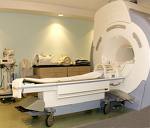 The study is highlighted in the September issue of the Journal of the American College of Radiology. It is clear that the radiology practice in the United States is currently shifting to start proving coverage in a 24/7 manner. The continued coverage applies mainly to CT and MRI, where interpretation of generated images takes place rapidly either by on-call radiologists or teleradiology service providers. Yet, other medical imaging procedures, such as conventional X-rays, are still not covered completely, particularly during night and early morning hours.
The study is highlighted in the September issue of the Journal of the American College of Radiology. It is clear that the radiology practice in the United States is currently shifting to start proving coverage in a 24/7 manner. The continued coverage applies mainly to CT and MRI, where interpretation of generated images takes place rapidly either by on-call radiologists or teleradiology service providers. Yet, other medical imaging procedures, such as conventional X-rays, are still not covered completely, particularly during night and early morning hours.
Subscribe to:
Posts (Atom)